The Power of Vehicle Signage: Turning Your Fleet into Brand Awareness
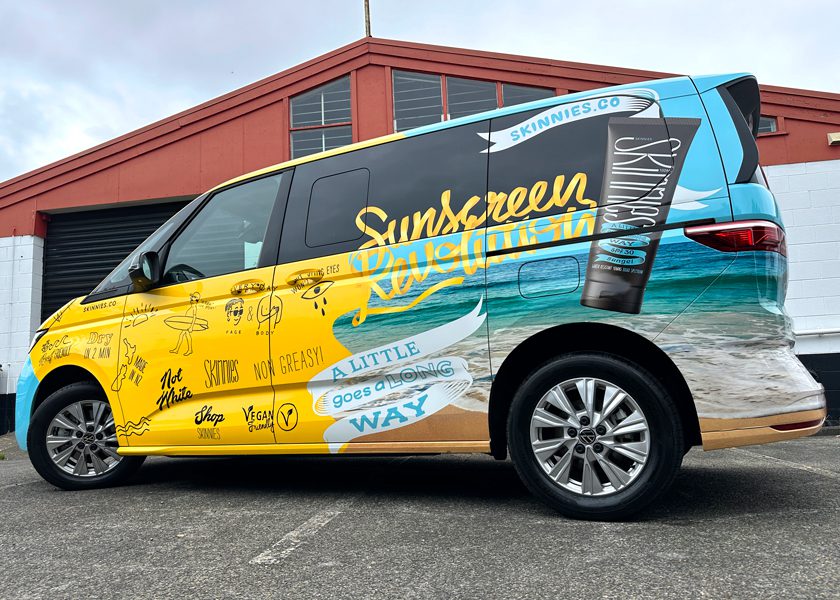
Your vehicle is already part of your business. Whether you operate a single van, Ute or car, have several vehicles travelling between customer sites, or manage a larger fleet, every journey creates another opportunity for your brand to be seen. With the right signage, those vehicles become a consistent brand presence.
Effective vehicle signage is about more than simply putting a logo on a vehicle. It should be considered part of your wider brand kit, working alongside your logo, colours, graphics and other branded materials to create a consistent visual identity wherever your business is seen.
The strongest designs also take into account that a vehicle is a moving environment. People may only catch the signage briefly, so the design needs to communicate clearly without trying to say everything at once. Simplicity, bold colour and strong contrast all play an important role in creating vehicle branding that’s recognisable and memorable.
In this guide:
- Why Vehicle Signage Matters for Brand Awareness
- Make Vehicle Signage Part of Your Brand Kit
- The Three Principles of Effective Vehicle Signage
- Turn Everyday Travel into Brand Awareness
- One Brand, Multiple Vehicles
- Choosing the Right Vehicle Signage for Your Business
- From Signage to Brand Awareness
- Talk to BIG About Your Vehicle Signage
- FAQs
Why Vehicle Signage Matters for Brand Awareness
Brand awareness is built through repeated exposure and recognition, and as business.govt.nz points out, a strong brand helps a business stand out and be remembered. While your website, premises, advertising, social media and other marketing channels all contribute to your brand presence, your vehicles can provide another highly visible brand touchpoint as part of the normal working day.
Unlike a sign that remains in one location, a branded vehicle moves with your business. It can be seen in different suburbs, outside different businesses and across the communities where you work, taking the brand well beyond the immediate workplace.
Vehicle signage, however, doesn’t function like a traditional advertisement. Its role is simpler, and more impactful for it, which is to make your business instantly recognisable. Consistent use of your logo, business name, colour palette and visual style helps people begin to associate those elements with your business.
Over time, repeated exposure can contribute to familiarity with the brand, particularly when the same visual identity is used consistently across your other marketing and customer touchpoints. For businesses where vehicles are a regular part of reaching customers and moving between locations, vehicle signage in Auckland and wherever else you travel is a practical way to extend that visual presence beyond your premises.
Make Vehicle Signage Part of Your Brand Kit
Vehicle signage shouldn’t be designed in isolation. It’s another application of your existing brand identity, so the design needs to work naturally with the visual language customers already associate with your business.
This means considering the same core elements you use elsewhere, including your logo, brand colours, typography, imagery and graphic assets. When these elements are translated consistently onto a vehicle, the result feels like an extension of the brand rather than an additional piece of advertising.
The shape of the vehicle also needs to be considered as part of the design. Doors, windows, panels, handles, curves and joins can all affect how graphics are positioned and how the finished signage is viewed from different angles. Rear window designs are worth planning early, as NZTA sets rules on where advertising and perforated film can be applied.
A strong vehicle signage design therefore begins with the brand, then considers how that brand can be applied effectively to the vehicle.
The Three Principles of Effective Vehicle Signage
Three key principles can help guide the design of effective vehicle signage, simplicity, bold colour and contrast.
1. Keep It Simple
A vehicle provides a surprisingly limited amount of time and space in which to communicate. Rather than trying to include every service, product, contact detail and message, the design should prioritise the information that helps people recognise the business.
The logo and business name will usually form the foundation, supported by brand colours and a strong graphic or visual element where appropriate. A short message can also have a place when it adds something meaningful to the design, though it should support the brand rather than compete with it. Negative space around those elements gives each one room to be read quickly, and the Skinnies van wrap shows how well that restraint can work, with bold, uncluttered branding that our team lined up with the smooth areas of the van so the lettering reads cleanly without distortion.
With many years of hands-on experience in the signage industry, BIG’s owner Ross Hall has seen how easily vehicle designs can become overloaded. In his experience, around 85% of businesses put more information on their vehicles than they need to, and his advice is to focus on what people need to see and remember.
“Vehicle signage needs to communicate quickly. People may only see a vehicle for a few seconds, so the strongest designs focus on clear branding, bold colour and good contrast rather than trying to include every detail.”
2. Use Bold Colour
Colour is one of the most recognisable elements of a brand and can play an important role in helping vehicle signage stand out. Using established brand colours creates consistency with other parts of the business, while considered use of colour helps the signage remain visible across the vehicle. Bold doesn’t necessarily mean using lots of different colours, and a strong brand palette is often more effective when used confidently and consistently.
The aim is a visual identity that can be recognised from a distance and still feels unmistakably connected to the wider brand. For Paint the Earth’s custom illustrated vehicle wrap, the studio’s signature purple runs across every panel, and getting it exactly right took several rounds of print samples and colour testing. The finished vehicle earned a Silver at the NZ Sign Display Awards 2026.
3. Create Strong Contrast
Contrast is what separates the important elements from the vehicle itself and from everything around it. It matters most when the vehicle is on the move, seen from an angle or set against a busy background, and it needs to hold up at varying distances, in bright sunlight and on overcast days. Light lettering on a dark background, or dark lettering on a light one, keeps the name and logo clear in all of those conditions, whatever the colour and shape of the vehicle carrying them. The Kiwi Commercial Cleaning vehicles show the effect well, with the fern from the logo printed in a satin metallic finish that stands out crisply against black.
Turn Everyday Travel into Brand Awareness
A company vehicle is already travelling to the places a business needs to be. Vehicle signage gives those everyday journeys another purpose by putting the brand in front of people along the way, without adding anything to the day’s schedule. One vehicle may travel the same routes repeatedly, building familiarity with the people who see it regularly, and a fleet multiplies those opportunities across the region.
The Ministry of Transport’s fleet statistics give a sense of how many vehicles share New Zealand roads, and a clearly branded one gives people a reason to notice it. Vehicles parked at worksites, customer premises and roadside locations keep that visibility going even when they’re not moving.
One Brand, Multiple Vehicles
For businesses with more than one vehicle, the stronger approach is to treat the fleet as one brand. That means consistent logo placement, colours, typography and level of information, with a visual treatment adapted to each vehicle type so the brand is recognisable on a hatchback, a van or a truck. The vehicles don’t need to look identical in every detail, though they should feel like part of the same brand.
Each vehicle then reinforces the others, and fleet signage becomes a presence people know wherever they see it. The bus wraps BIG has produced for Auckland Transport show that consistency at scale, with colour-coding and branding making each route immediately identifiable. BIG’s vehicle signage work applies the same thinking to fleets of every size.
Choosing the Right Vehicle Signage for Your Business
There’s no single approach to vehicle branding that suits every business. The right option will depend on the vehicle, the existing brand, the desired visual treatment and how the vehicle is used.
|
Vehicle Signage Option |
What It Offers |
|
Vehicle Signwriting |
Vehicle signwriting can provide clear, professional branding while retaining much of the vehicle’s original appearance. It can be an effective approach when the priority is clear identification and consistent brand presentation. |
|
Partial Wrap |
A partial wrap provides greater scope for colour, graphics and visual treatment across selected areas of the vehicle. It can create a stronger visual presence while concentrating the design where it has the greatest impact. |
|
Full Wrap |
A full wrap provides extensive coverage across the vehicle and creates a larger canvas for brand colours, graphics and distinctive visual treatments. For some businesses, this can provide a strong and highly recognisable presence on the road. |
|
Vehicle Decals and Magnetic Signage |
Decals and magnetic signage provide additional options where branding needs to be applied to particular areas or where removable signage is appropriate for the vehicle and its use. |
Not every vehicle needs a full wrap, since each of these formats can carry a simple, bold and high-contrast design. Where a wrap is the right choice, careful preparation before a wrap goes on is what keeps the finish looking sharp over time, and BIG’s comparison of vehicle signage vs car wraps in Auckland covers the options in more detail.
From Signage to Brand Awareness
Vehicle signage isn’t simply about making a work vehicle look professional. Done well, it becomes another physical expression of the brand, working alongside the shopfront, the office and the website to build recognition. The thinking behind creating memorable business signs applies on the road as well, with the added challenge of a viewer who is often on the move.
BIG’s in-house design and digital printing teams design, print and apply vehicle graphics under one roof, and that work was recognised when BIG won the 3M All Wraps Challenge 2024. It’s in the name. We take big ideas and produce signage that makes an impact.
Talk to BIG About Your Vehicle Signage
Whether you’re branding your first business vehicle or developing a consistent look across multiple vehicles, BIG can help translate your existing brand into signage that works on the road. The focus is on creating a considered design that supports your brand identity, communicates clearly and gives your business a recognisable presence wherever it goes.
Reach out today to speak to one of our experienced team about your vehicles and what you’re hoping the branding will achieve. We’ll guide you through the options and help you get there. We work alongside you from the first conversation through to installation, so the signage you end up with is the right fit for your fleet and makes your vehicles work harder for your business.
FAQs
How Long Does Vehicle Signage Last?
Professionally installed vehicle signage from BIG is designed to withstand New Zealand conditions, with its lifespan influenced by factors including vinyl quality, vehicle use and sun exposure. Regular cleaning and addressing lifting edges promptly can help maintain the finish.
Can Vehicle Signage Be Removed Without Damaging the Paint?
Yes. Our signage can generally be removed without damage when the correct vinyl and adhesive have been used, and the signage has been professionally installed. Professional removal is recommended to help protect the paintwork underneath.
What Is the Difference Between Vehicle Signage and a Vehicle Wrap?
Vehicle signage generally refers to decals, vinyl lettering or magnetic signs applied to selected areas of a vehicle, while a wrap uses vinyl film across a larger area. Wraps can be either partial or full, depending on the desired coverage and visual treatment. BIG has a separate guide covering the differences between vehicle signage and car wraps in more detail.
Can BIG Help Choose the Right Vehicle Branding Option?
Yes. BIG works with businesses of all sizes to determine whether vehicle signage, a partial wrap or a full wrap is appropriate, considering the vehicle, branding objectives and other project requirements. We manage all stages of design, fabrication and installation in-house.